
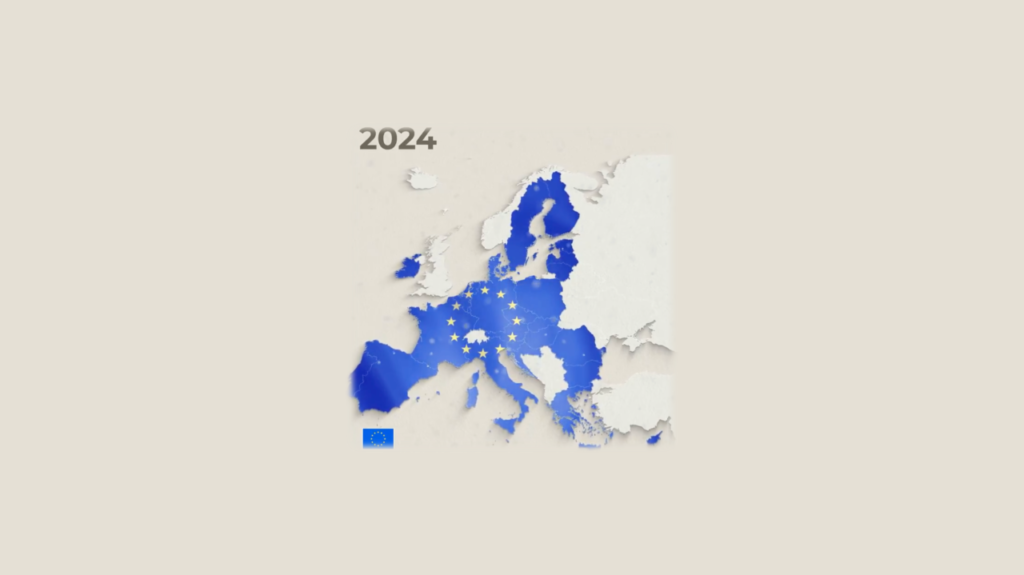
The year 2024 marks the 20th anniversary of the European Union’s largest wave of enlargement in 2004, when numerous Central and Eastern European nations joined the EU. Enlargement, the process of integrating new members, has served as one of its most effective tools for fostering peace, development, and shared prosperity. This achievement was recognized by the Norwegian Nobel Committee in 2012, which awarded the EU the Nobel Peace Prize for its contributions to advancing peace, reconciliation, democracy, and human rights in Europe.
Despite its successes, the process of EU enlargement has not been without challenges. The pace of accession has often slowed due to geopolitical tensions, public skepticism, and internal divisions. However, the current European Commission faces a pivotal opportunity to reinvigorate the enlargement process, transforming it into a defining success story. As President Ursula von der Leyen remarked, recent crises such as the COVID-19 pandemic and Russia’s war on Ukraine have accelerated the need for decisive action, stating that the EU must “rise to a new reality.”
Under the European Commission’s 2024–2029 mandate, a robust enlargement strategy would not only reaffirm the EU’s global leadership but also solidify its influence by anchoring the Western Balkans and Eastern Europe within a stable framework. Further, during the press conference after The EU-Western Balkans Summit, Von der Leyen has emphasized the importance of actively bringing aspiring members closer, focusing on EU accession and gradual integration into the Single Market. The Commission’s priorities also include leveraging the EU’s global partnerships to promote peace, stability, and economic resilience in its wider neighborhood.
The EU’s history demonstrates the transformative power of enlargement. From post-Cold War integration in Eastern Europe to the economic convergence of Southern Europe, expansion has consistently driven stability and growth. New member states from the 2004 enlargement have made significant economic progress in increasing their GDP per capita relative to the EU average by 20.3 percentage point while the Western Balkans have seen slower convergence, improving by only 13 percentage points over the same period (table).

Higher living standards in new Member States speaks in favor of the Union’s transformative power. The impact of EU on the economy is estimated at additional 12%-20% of GDP per capita and the effects of the European Single Market on trade and GDP are estimated at approximately 10% of EU GDP on average as stated by Single Market at 30, COM(2023). Access to EU funds has also been transformative, with member states receiving significantly more resources than candidate countries. For example, per capita EU funding is 22 times higher for New Member States compared to Candidate Countries (EU Structural Funds vs IPA 2021-2027).
Why should the EU enlargement succeed?
It will strengthen geopolitical influence of the EU, promote economic resilience, secure regional stability and reaffirm the EU core values. In today’s increasingly competitive global landscape, the European Union (EU) must address the growing influence of external actors like Russia in its neighborhood. The EU should also regain its leading position in global economy after losing pace against China in the last decade and with estimated 14.4% share of global economy measured as GDP in PPS. A credible and effective enlargement policy would anchor these regions within a rules-based European framework, countering destabilizing forces and fostering long-term peace. Integrating new members brings mutual economic benefits. Candidate countries gain access to the EU single market, spurring investment, trade, and job creation. For the EU, a larger, more integrated economic bloc enhances competitiveness and innovation. The prospect of EU membership motivates these countries to undertake necessary reforms, rule of law, fostering stability in a region critical to Europe’s security architecture. Enlargement is a demonstration of the EU’s commitment to democracy, human rights, and the rule of law. At a time when these values are under threat globally, successfully integrating new members would reinforce the EU’s identity as a values-driven union.
The Path Forwward
A strategic path forward is needed, with clear vision, joint ownership and credible framework for reforms and transparent communication of the benefits. The path that will promote a phased integration process, prioritizing rule of law and governance reforms, enhancing regional cooperation and leveraging financial instruments. These principles are at the core of the EU Growth Plan for the Western Balkans, which was meticulously developed through extensive dialogue between EU institutions and candidate countries. I was honored to co-host with DG Near Director Koopman theinaugural Ministerial Meeting in Skopje in November 2023, where this transformative Plan was officially presented. Equally critical is the need to effectively communicate the Plan’s relevance and benefits, ensuring public awareness and support, while fostering seamless coordination among various organizations and initiatives to maximize impact and drive progress.
A gradual approach is allowing candidate countries to participate in specific EU structures such as the single market and provides immediate benefits while addressing political concerns within the Union. This phased process builds trust and demonstrates tangible progress. The leaders form the Western Balkans must show strong commitment with effective results in their reform agenda and accession process to the EU.
The success of EU enlargement will define the European Commission’s legacy for 2024–2029. For countries like the Western Balkans, Ukraine, Moldova, and Georgia, the EU represents hope and a path to modernization. For the EU, their integration ensures a stronger, more cohesive Union. Through strategic use of initiatives like the EU Growth Plan and the Berlin Process, the European Commission can transform enlargement into a success story. It is not just about policy – it is about demonstrating Europe’s vision for a united and prosperous future, solidifying its role as a global leader and advocate for democracy and resilience. Better quality of life!